

While the Farnborough International Airshow is known for aircraft, major orders and headline announcements, this year also highlighted the central role of materials, manufacturing, and industrial capability in developing aerospace concepts for commercially viable programmes.
The commercial figures alone underline the scale of the opportunity. Across the four trade days, Farnborough generated £62.9 billion in announced commercial aircraft deals, including 353 firm aircraft orders and 904 firm engine orders. ADS estimates that these agreements could deliver more than £10.8 billion in value to the UK economy.
Meeting this demand will require more than innovative aircraft concepts. Success will depend on resilient supply chains, scalable manufacturing, increased automation, and the ability to produce complex structures at higher rates.
A Framework for the UK's Composites Advantage
A key announcement was the launch of the Aerospace Technology Institute's new composites framework, A Framework for Growth: Securing the UK's Composites Advantage.
The framework identifies five priorities for coordinated action across the sector:
- High-rate industrial systems.
- Advanced tooling capabilities.
- Novel structural concepts.
- Material supply chain resilience.
- Greater depth within the manufacturing supply chain.
These priorities address a core challenge for UK aerospace. While the UK has world-class composites expertise, maintaining this position requires translating technical capability into repeatable, cost-effective, high-rate production.
This is especially important as manufacturers prepare for future single-aisle aircraft. The next generation must achieve significant efficiency gains and be produced at rates that meet growing global demand.
The framework also highlights the strategic importance of materials sovereignty. Although carbon fibre contributes an estimated £1.3 billion to the UK economy, the country relies entirely on imports for aerospace and defence. Building resilience in materials, tooling, and manufacturing is now an economic and strategic necessity.
The publication offers clear direction for industry, research organisations, and government. The next step is to turn this direction into coordinated investment, industrial capability, and opportunities across the UK supply chain.
COMPASS Demonstrates Manufacturing at Speed and Scale
The framework's release was timely, following the recent opening of the University of Sheffield AMRC's COMPASS facility.
COMPASS (Composites at Speed and Scale) was established to bridge the gap between developing composite components and manufacturing them economically at aerospace production rates.
COMPASS supports the automated manufacture of large composite structures, using digital technologies and digital twins to improve process control, accuracy and repeatability. Related technologies were showcased throughout Farnborough, making discussions around high-rate production far more tangible.
Facilities of this kind provide the environment needed to develop, demonstrate and de-risk new manufacturing approaches before they are introduced onto live aerospace programmes. They also allow equipment providers, materials suppliers, manufacturers and research organisations to work together on complete production systems rather than considering individual technologies in isolation.
The link between the ATI framework and COMPASS is clear. To secure future aircraft programmes, the UK must demonstrate it can design, industrialise, and consistently produce advanced composite structures at scale and competitive cost.
Composites Across the Show
Advanced composite materials featured prominently across commercial aerospace, defence, space, and advanced air mobility at Farnborough.
Companies such as Hexcel, Syensqo, Toray Advanced Composites, and Albany Engineered Composites demonstrated how advanced materials are enabling lighter, more efficient, and more capable aircraft.
Hexcel showcased carbon fibres, prepregs, honeycomb, and engineered composite solutions for commercial aerospace, defence, and space. However, the industry conversation has expanded beyond weight reduction.
The industry now considers the full manufacturing and operational landscape, including faster processing, automated deposition, material availability, quality assurance, repairability, waste reduction, and higher production volumes.
The Wing of Tomorrow programme is another example. Airbus announced a new flight-test campaign to evaluate longer, higher-aspect-ratio wings for future single-aisle aircraft. With significant UK industry involvement, the programme shows that progress in structures, materials, aerodynamics, and manufacturing must advance together.
These programmes are important because the next generation of aircraft will not be enabled by a single breakthrough. Progress will come from integrating developments across materials, structures, propulsion, digital engineering and advanced manufacturing.
Advanced Air Mobility Becomes More Tangible
Advanced air mobility had a much stronger presence at Farnborough this year. Companies such as Vertical Aerospace, Joby Aviation, BETA Technologies, Archer Aviation, and Eve Air Mobility presented aircraft and technologies at a scale that demonstrates the sector is moving toward certification, production, and operational development.
One of the standout moments of the week was Vertical Aerospace's public demonstration flight, showcasing how Advanced Air Mobility is moving from concept towards reality. This was part of ST Engineering's presence and provided an important opportunity to showcase the breadth of the group's capabilities and to interact directly with customers, partners, and the international aerospace community.
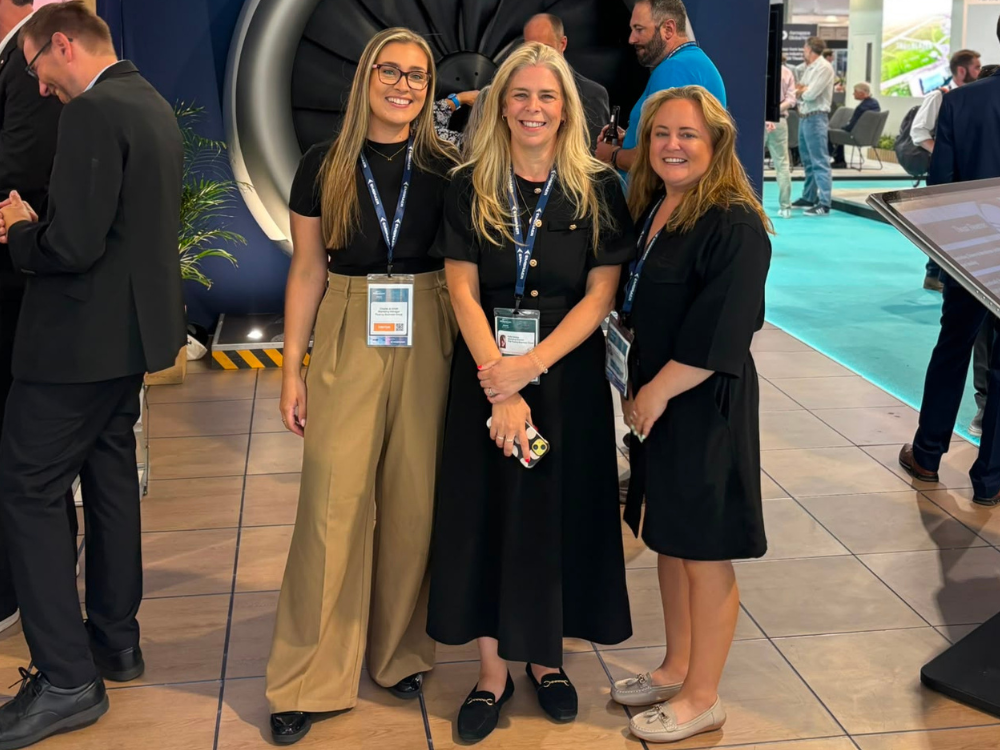
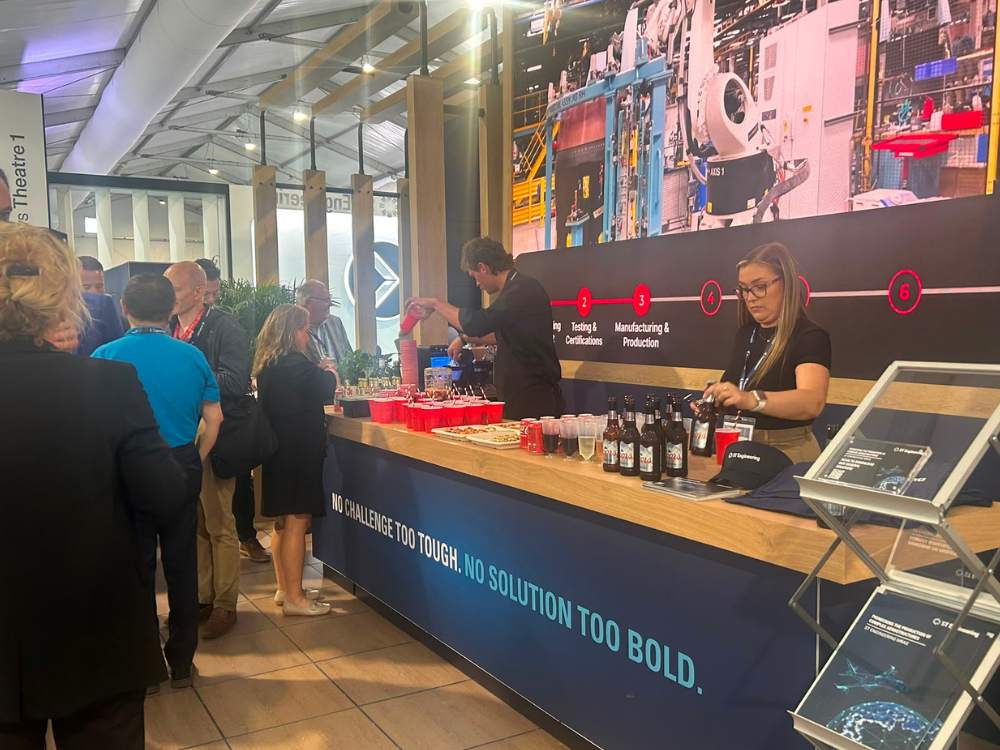
Alongside this, we were proud to support our client ST Engineering MRAS throughout the week on its busy exhibition stand.
The team's networking happy hour was a particular highlight, bringing together customers, partners and industry colleagues in a relaxed setting after a busy day at the show. Farnborough is ultimately built around relationships, and events such as this give valuable space for conversations that do not always happen during scheduled meetings or formal presentations.
We also supported on–site interviews for Aerospace Global News, capturing informed perspectives from the show. These conversations explored Farnborough's developments and their implications for the wider aerospace sector.
From Innovation to Industrialisation
The aircraft orders announced at Farnborough demonstrate confidence in the continued growth of the global aerospace industry. Nevertheless, they also place considerable pressure on manufacturers and supply chains that are already being asked to increase production, improve sustainability while preparing themselves for future platforms.
For the advanced materials and engineering community, this presents both opportunity and responsibility.
Technologies for lighter structures, efficient wings, electric aircraft, autonomous systems, and next-generation defence platforms are advancing rapidly. The main challenge is industrialising them at the required speed, scale, quality, and cost.
Farnborough 2026 demonstrated that advanced materials are now central to productivity, resilience, sustainability, and international competitiveness, rather than a specialist topic.
The ATI composites framework sets a clear direction, and facilities like COMPASS demonstrate emerging capabilities. The next step is consistent collaboration among suppliers, manufacturers, equipment providers, research organisations, government, and the wider aerospace supply chain.
The future of aerospace depends not only on aircraft concepts, but also on the industry's ability to build the materials, manufacturing systems, and supply chains needed to realise them.