
Exhibiting is a significant investment, but the real value of a trade show is rarely determined by what happens during the two days on the show floor. Fluency Managing Director Gemma Hardy FCIM explores why a more strategic approach to exhibitions can deliver stronger commercial results.
Trade shows remain one of the most valuable opportunities for businesses in advanced engineering and manufacturing to connect with customers, develop relationships, showcase innovation and explore new markets.
Yet, despite the investment involved, exhibition planning can often become dominated by the practicalities: stand design, graphics, literature, logistics and who will be attending.
These things matter, but they are only part of the picture.
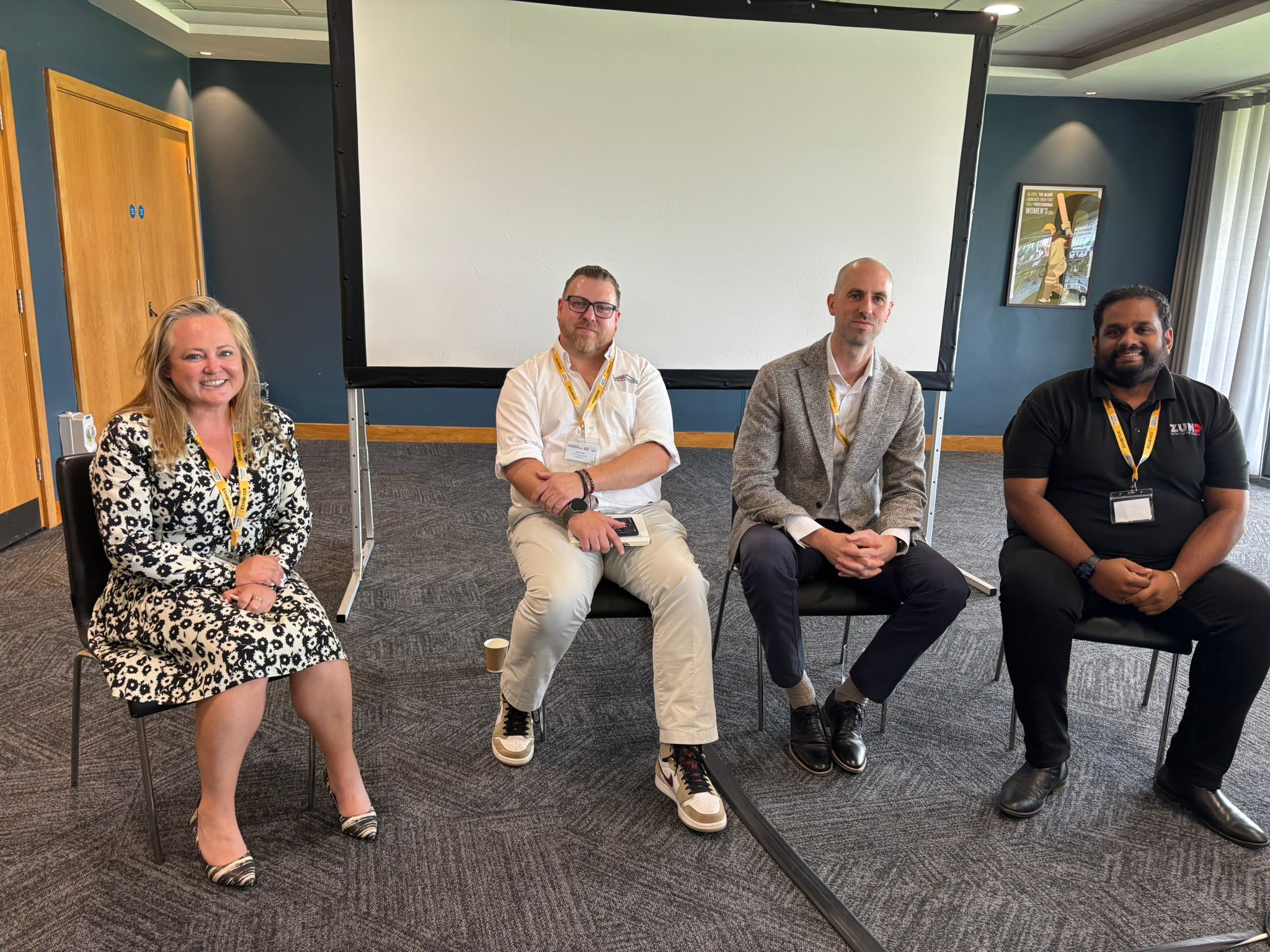
At Fluency, we have always advocated treating exhibitions as part of a wider marketing and business development strategy, rather than standalone events. It is an approach that was reinforced during the recent Advanced Engineering Exhibitor Kick Off, where our Managing Director, Gemma Hardy FCIM, chaired a panel exploring what successful exhibitors do differently.
Joined by Gaj Jeevanandan of Zund UK, Peter Comerford of Comton Group and Sean Isle of VAC Innovation, the discussion highlighted a number of practical lessons, but one message stood out: exhibition success is built before, during and after the event.
Start with the Commercial Objective, Not the Stand
Before deciding what an exhibition stand should look like, businesses should be asking a more fundamental question: what are we actually trying to achieve?
Is the priority to generate new sales opportunities? Introduce a technology to an unfamiliar market? Strengthen relationships with existing customers? Meet potential partners? Or increase awareness among a particular audience?
Each objective requires a different approach.
A business entering a new market, for example, may need to invest more heavily in pre-event awareness and targeted introductions. A company launching a new technology might focus on thought leadership, demonstrations and securing meetings with influential decision-makers.
The important thing is that the exhibition supports a defined commercial ambition.
Without that clarity, it becomes very easy to spend considerable time and money creating an impressive stand without establishing what success should actually look like.
Give People a Reason to Meet You
One of the most common weaknesses in exhibition marketing is relying on announcements that simply tell people where a company will be exhibiting.
“We’re exhibiting at Advanced Engineering. Come and see us on Stand X.”
There is nothing inherently wrong with this message, but it gives potential visitors very little reason to act.
A stronger campaign focuses on what matters to the audience. What challenges can you help solve? What new capabilities are you introducing? What industry developments can you offer insight into?
That thinking should inform the entire pre-event campaign, from email marketing and LinkedIn activity to technical articles, video content, direct outreach and meeting invitations.
It is also worth identifying the companies and individuals you particularly want to engage with before the event.
Trade shows provide an excellent opportunity for unexpected conversations, but relying entirely on passing footfall means leaving some of the most valuable opportunities to chance.
Your Stand is Only as Effective as the Conversations it Creates
Exhibition stands need to attract attention, but attracting attention is not the same as generating commercial value.
Clear, concise messaging is essential. Visitors should be able to understand who you are, what you offer and why it matters to them within seconds.
Trying to communicate every capability, product and service can make that much harder.
The panel also discussed the value of demonstrations, video, interactive content and other ways of encouraging engagement. These can be extremely effective, provided they support the company’s message rather than simply creating activity.
However, the people representing the business are just as important as the physical stand.
Everyone should understand the exhibition objectives, the key messages, the priority contacts and how enquiries will be managed.
It sounds straightforward, but a proper pre-event briefing can make an enormous difference to the quality of conversations and the opportunities generated.
The Most Important Work May Happen After the Event
One of the biggest missed opportunities in exhibition marketing is failing to follow up effectively.
Businesses invest months preparing for a show, spend two days meeting potential customers and then return to the office to find themselves overwhelmed by everything that has accumulated in their absence.
The result can be delayed responses, incomplete records and promising conversations that never develop further.
Follow-up should therefore be planned before the exhibition begins.
Who is responsible for contacting new prospects? How will leads be prioritised? What information needs to be recorded? How will opportunities be passed between marketing, sales and technical teams?
Importantly, not every valuable conversation will lead to an immediate enquiry.
In advanced engineering and manufacturing, sales cycles can be lengthy and purchasing decisions often involve multiple stakeholders. A conversation at an exhibition might be the beginning of a relationship that develops over many months.
That makes ongoing engagement, relevant content and structured lead nurturing particularly important.
Measuring What Really Matters
Exhibitions are often judged by the number of leads collected or orders secured immediately afterwards.
Both can be useful measures, but neither necessarily tells the full story.
If the original objective was to establish a presence in a new market, then meetings with strategically important companies, new industry relationships and increased market awareness may represent significant progress.
If the aim was to generate qualified opportunities, the focus should be on the quality and progression of those opportunities, not simply the number of badge scans.
And if the exhibition was intended to strengthen existing customer relationships, those interactions should form part of the evaluation.
The key is to establish meaningful measures of success in advance and continue tracking results beyond the event itself.
For many businesses, the commercial impact may only become clear six or twelve months later.
Making Exhibitions Work Harder for your Business
The strongest exhibition strategies connect multiple activities around a common objective.
Market research helps identify the right audience. Marketing builds awareness and creates reasons to engage. Business development secures valuable conversations. Content and stand messaging communicate the proposition. Structured follow-up helps turn initial interest into longer-term relationships.
When these activities work together, an exhibition becomes much more than a few days on a show floor.
It becomes an opportunity to accelerate a wider commercial strategy.
At Fluency, we help businesses across advanced engineering, advanced materials and manufacturing connect marketing activity with commercial objectives. From strategic planning and market positioning to campaign development, content creation and business development support, our focus is on helping clients make more meaningful connections and create opportunities for growth.
With Advanced Engineering 2026 approaching, now is the time for exhibitors to think beyond their stands and consider how the event can support their wider business ambitions.
Planning your next exhibition? Talk to Fluency about making your event activity work harder for your business.